
- The Wayfinder
- Frameworks & Frictions
In July 2025, a Regional Bahn accident near Riedlingen left three dead and dozens injured, triggering not just rescue operations, but a wave of questions about how Europe treats its rail victims. This post aims to decode the systems that respond when passengers are hurt: from emergency triage to insurance claims, and from hospital transfers to legal recourse. Suppose you’re a victim, a relative, or simply navigating Europe’s rail infrastructure. In that case, this guide offers clarity on what happens next and what you’re entitled to.
What Happened in the Regional Bahn Accident
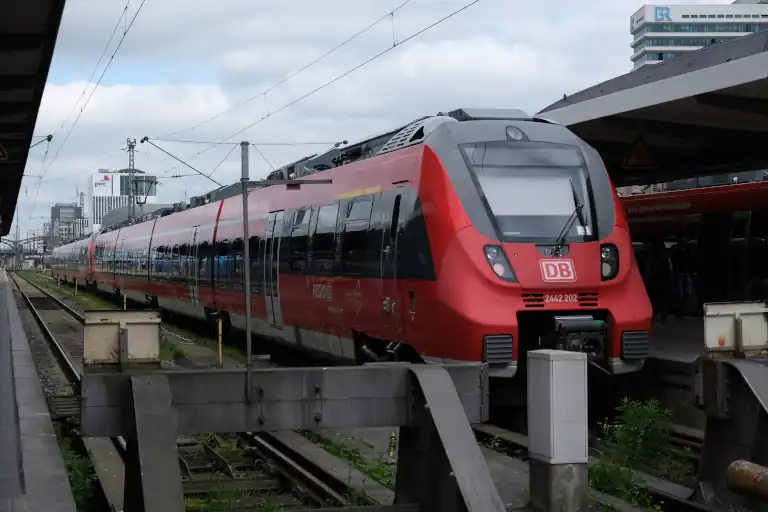
On July 27, 2025, a Regional-Express 55 train operated by DB Regio BW derailed near Zell, Baden-Württemberg. The accident killed three people, including the train driver and a railway trainee, and injured over 30 passengers. Early investigations suggest a landslide triggered by heavy rainfall may have caused the derailment. Emergency teams, helicopters, and rescue dogs reached the site within minutes, but the terrain complicated access and delayed triage for several victims.
Sequence of Events and Passenger Impact
The Regional Bahn accident on July 27, 2025, unfolded in minutes but exposed vulnerabilities years in the making. At 18:10 CEST, two carriages of the Regional-Express 55, operated by DB Regio BW, derailed near Zell in Baden-Württemberg. The train had departed Sigmaringen en route to Ulm, carrying approximately 100 passengers. The derailment killed three people, including the driver, a railway trainee, and one passenger. It injured at least 36 others, with 25 in serious condition.
Weather, Terrain, and System Response
Hours before the accident, the Southern Weather Station issued a violet-level warning for extreme rainfall, 50 litres per square meter in under an hour. Authorities had flagged the area in hazard maps as prone to landslides. Despite this, no operational alert reached Deutsche Bahn’s control center, which cited the impracticality of monitoring all 33,000 km of track in real time.
When the train entered a tree-lined cutting near Zell, a landslide, likely triggered by drainage overflow, struck the embankment. The lead car remained upright, but the second and third cars derailed violently. Emergency teams, helicopters, and rescue dogs arrived within minutes, but terrain complexity delayed access to several victims.
Medical Treatment and Compensation Frameworks
In the aftermath of the Regional Bahn accident, emergency responders triaged victims on-site. They transferred the seriously injured to trauma centers in Ulm and Tübingen. Under EU law, emergency medical treatment begins immediately, regardless of insurance status. Hospitals do not delay care for foreign nationals, tourists, or undocumented passengers. Treatment continues until stabilization, after which insurance and liability frameworks determine cost recovery.
Compensation for Death and Injury
Victims’ families are entitled to compensation under Germany’s Passenger Rights Act, which aligns with EU Regulation 1371/2007. In fatal cases, Deutsche Bahn coordinates with insurers to offer structured payouts. Still, legal claims may escalate if negligence is proven. Compensation typically includes:
- Funeral costs and survivor support
- Medical expenses and rehabilitation
- Loss of income and psychological trauma
For international passengers, liability may also extend under the Montreal Convention (1999), especially if the journey involved cross-border rail-air coordination. Legal teams often invoke this framework to challenge payout ceilings and demand uncapped compensation when systemic fault is evident.
For a broader look at surface transport rules, passenger rights, and editorial insights into contract vulnerabilities, explore our dedicated Surface Transport page.
Why Schengen Requires €30,000 Medical Insurance
All Schengen visa applicants must carry €30,000 in medical coverage, as mandated by EU Regulation (EC) No 810/2009. The €30,000 Schengen medical insurance requirement ensures that travelers can access emergency care, hospitalization, and repatriation without placing a burden on host countries. However, treatment begins regardless of whether coverage is available. The insurance merely guarantees reimbursement and legal clarity post-treatment.
This requirement reflects Europe’s commitment to universal emergency response, while protecting its healthcare systems from unpaid liabilities. It also reinforces the editorial principle: systems must respond first, then reconcile cost later.