
- The Wayfinder
- Frameworks & Frictions
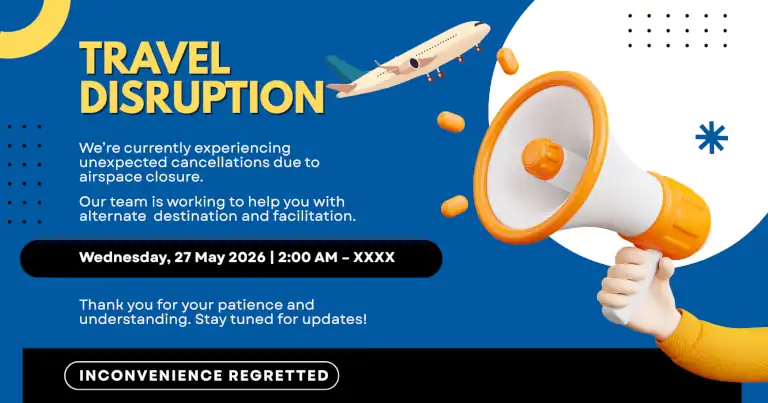
Travel disruptions in 2026 continue to reshape how international journeys unfold, especially when conflict spillovers and sudden airspace closures interrupt even well‑planned itineraries. This guide explains the protections travelers can rely on, how the Montreal Convention applies during instability, and why understanding your rights is the most effective way to stay grounded and prepared.
Travel Disruptions 2026: What’s Driving the Instability
A mix of geopolitical tensions, sudden airspace closures, overstretched airline operations, and unpredictable weather is shaping travel disruptions in 2026. These forces create delays and missed connections far from the disruption’s source. Knowing these drivers helps travelers stay ready instead of overwhelmed.
Conflict Spillovers and Airspace Closures
Conflict-linked events remain among the most disruptive forces in global aviation. However, even when travelers are not flying directly into a conflict zone, any ripple effects impacting major hubs and long-haul routes are closely monitored. The industry remains committed to passenger safety and minimizing disruptions wherever possible.
How sudden NOTAMs reshape flight path
NOTAMs (Notices to Airmen) can close airspace with little warning. When this happens:
- Airlines must reroute aircraft mid‑flight.
- Flight times increase by hours.
- Crews may “time out” due to duty limits.
- Connections become impossible to maintain.
A single airspace closure can disrupt dozens of routes and create a chain reaction across continents.
Why nearby regions feel the impact even without direct conflict
Travelers often assume that disruptions affect only the conflict zone itself. In reality:
- Neighboring countries may restrict overflights for safety reasons.
- Airlines may avoid entire regions to reduce risk.
- Alternate airports become congested with diverted flights.
- Ground handling teams struggle to absorb sudden volume.
This explains how a conflict in one region can cause delays thousands of kilometers away.
Airline Operational Strain
Airlines in 2026 face tighter margins, lean staffing, and higher demand, intensifying the impact of each disruption.
Crew shortages and cascading delays
When a crew reaches its legal duty limit:
- The aircraft cannot depart.
- Replacement crews may not be available.
- Delays spill into the next day’s schedule.
This is a common but hidden cause of lengthy disruptions.
Airport congestion and infrastructure limits
Many airports still rely on decades-old infrastructure. As a result:
- Gate shortages create bottlenecks.
- Taxiway congestion slows departures.
- Ground handling teams become overstretched.
- A single delay can block multiple aircraft.
These structural limits slow and complicate recovery from disruptions.
Weather Extremes and Climate‑Linked Disruptions
Weather has always shaped aviation, and while climate extremes are more frequent and unpredictable, the aviation industry continues to adapt effectively.
Storm systems and seasonal unpredictability
Travelers may encounter:
- Sudden monsoon shifts.
- Stronger winter storms.
- Heatwaves that reduce aircraft performance.
- Turbulence corridors that force rerouting.
These events now come with less warning than before.
When airlines can and cannot claim “extraordinary circumstances.”
Airlines frequently cite weather as a reason to deny compensation. However:
- Duty of care still applies (meals, water, accommodation).
- Compensation may apply if the airline mishandled the recovery.
- The weather must be proven to be the primary cause.
Knowing this distinction can reassure travelers and help them avoid unnecessary losses during travel disruptions.
Passenger Rights Under the Montreal Convention During Travel Disruptions
Travel disruptions can feel chaotic, but the Montreal Convention provides a stable legal foundation that protects passengers across borders. Understanding these rights helps travelers stay calm, assertive, and financially protected even when disruptions escalate due to conflict, weather, or operational strain.
What the Montreal Convention Covers, and Why It Matters in 2026
The Montreal Convention governs international air travel and ensures passengers receive compensation and care when disruptions occur. In a year marked by unpredictable travel disruptions, these protections act as a safety net.
Passengers are covered for:
- Delays.
- Cancellations.
- Missed connections.
- Lost, delayed, or damaged baggage.
- Out‑of‑pocket expenses caused by disruptions.
These rights apply regardless of the cause, including conflict spillovers, sudden NOTAMs, or weather‑related rerouting, as long as the airline is responsible for the delay’s management.
When Airlines Must Provide Compensation
Compensation applies when:
- The airline could have prevented or mitigated the disruption.
- Poor recovery planning worsened the delay.
- Passengers were not rebooked at the earliest opportunity.
- Communication failures caused additional losses.
Even during extraordinary circumstances, airlines must still demonstrate they took all reasonable measures to avoid the disruption.
Duty of Care: What Airlines Must Provide Regardless of Cause
Duty of care applies even during war‑related or weather‑related disruptions. Airlines must provide:
- Meals and refreshments.
- Hotel accommodation for overnight delays.
- Transport between the airport and the hotel.
- Access to communication (Wi‑Fi vouchers, phone calls).
This duty is non‑negotiable and does not depend on who caused the disruption.
Claiming Reimbursement for Travel Disruptions
Passengers can claim reimbursement for expenses incurred due to delays or cancellations. Keeping receipts is essential.
Eligible claims include:
- Meals and essentials that were purchased during long delays.
- The hotel stays when the airline fails to provide accommodation.
- Transportation costs due to missed connections
- Replacement items for delayed baggage
How to File a Claim Effectively
To strengthen a claim:
- Document everything: boarding passes, receipts, delay notices.
- Request written confirmation of the cause of the delay.
- File the claim within the airline’s specified timeframe.
- Follow up if the airline does not respond within 30 days.
A well‑documented claim significantly increases the likelihood of reimbursement.
For a deeper breakdown of what these protections mean in real‑world travel disruptions, explore our full Montreal Convention guide.
How Travel Disruptions Affect Connections, Layovers, and Multi‑Segment Journeys
Modern itineraries often involve multiple segments, tight layovers, and complex routing. In 2026, travel disruptions increasingly strike mid‑journey — after passengers have already completed part of their trip. These situations create unique challenges, especially when visas, airspace closures, or war‑related restrictions affect the onward connection. Understanding these nuances helps travelers protect themselves when disruptions occur far from home.
When Disruptions Hit After You’ve Already Started Your Trip
Many travelers assume protections apply only before departure. In reality, some of the most stressful travel disruptions occur after the first flight has already departed, leaving passengers stranded at a layover airport or unable to continue to their destination.
This is especially common when:
- A round‑trip PNR is partially used.
- The return segment becomes impossible due to conflict.
- A layover airport suddenly restricts transit.
- Airspace closures force cancellations mid‑journey.
Once the first segment is flown, the airline has a heightened responsibility to complete the journey or provide an equivalent alternative.
What Happens When Your Return Flight Becomes Impossible
If war, NOTAMs, or airspace restrictions make the return leg unsafe or impossible:
- The airline cannot cancel the remaining flights in your PNR without offering alternatives.
- You retain the right to reroute at the earliest opportunity.
- You may request a refund for the unused portion.
- Duty of care applies until you are rebooked or returned home.
A partially used ticket does not reduce your rights. In fact, it strengthens them because the airline is now responsible for completing your carriage.
Layover Disruptions: When You’re Stuck in Transit Without a Visa
One of the most overlooked travel disruption scenarios is being stranded at a transit airport where you cannot legally enter the country.
This can happen when:
- The onward flight has been canceled due to a scheduling conflict.
- The weather forces the shutdown of operations at the connecting hub.
- Airspace closures force diversions.
- The airline misconnects you due to operational delays.
Passengers without a visa cannot simply “go to a hotel”, and airlines must account for this.
Airline Responsibilities When You Cannot Enter the Transit Country
In no‑visa transit disruptions, airlines must:
- Provide airside accommodation or access to a transit hotel.
- Ensure meals and water are available within the secure zone.
- Rebook you on the next available flight.
- Avoid forcing you to clear immigration illegally.
- Coordinate with airport authorities for extended‑stay permissions if needed.
These obligations fall under the duty of care, regardless of the cause of disruption.
Missed Connections on a Single PNR vs. Separate Tickets
Travel disruptions affect passengers differently depending on how the itinerary was booked.
Single PNR (protected connection):
- The airline must rebook you at no cost.
- Duty of care applies.
- You cannot be stranded due to their delay.
- Montreal Convention protections apply throughout the journey.
Separate tickets (unprotected connection):
- The second airline may treat you as a no‑show.
- Rebooking may require paying fare differences.
- Duty of care may not apply across carriers.
- Travel insurance becomes essential.
In 2026, with disruptions more frequent, single‑PNR itineraries offer significantly stronger protection.
When Airlines Must Rebook You After a Missed Connection
Rebooking is mandatory when:
- The delay was caused by the airline.
- The connection was part of the same PNR.
- The airline changed the schedule after booking.
- Airspace closures forced rerouting.
Rebooking must be:
- At the earliest opportunity.
- On the same airline or a partner airline.
- At no additional cost.
If the airline refuses, passengers can rely on Montreal Convention provisions to assert their rights.
When a Layover Airport Becomes Unsafe or Inaccessible
In rare but increasing cases, a layover airport itself becomes affected by conflict or operational shutdowns. This can happen mid‑journey, leaving passengers in limbo.
Examples include:
- Sudden NOTAMs closing the hub.
- Missile threats or military activity.
- Airport evacuations.
- Severe weather grounds all operations.
In such cases, airlines must reroute passengers through alternative hubs, even if it requires rebooking across alliances.
Your Rights When the Airline Must Change Your Routing
If your original routing becomes impossible:
- You must be rerouted at no cost.
- You may choose a different final destination within the same region.
- You may request a refund if rerouting is unreasonable.
- Duty of care continues until you reach your destination.
Passengers are not expected to absorb the consequences of geopolitical instability.
Airline Responsibilities During Major Travel Disruptions
Airlines play a central role in how smoothly passengers recover from travel disruptions. In 2026, as delays are increasingly driven by conflict spillovers, weather extremes, and overstretched hubs, understanding what airlines must do and what they cannot avoid helps travelers navigate uncertainty with confidence.
How Airlines Must Support Passengers During Travel Disruptions
Travel disruptions are not just operational events; they trigger clear obligations. Airlines must protect passengers from being stranded, misinformed, or left without essential support, regardless of whether the disruption stems from war‑related airspace closures, weather instability, or internal scheduling failures.
Airlines are required to:
- Communicate the cause and expected duration of the disruption.
- Offer rerouting at the earliest opportunity.
- Provide duty‑of‑care essentials
- Assist passengers stuck mid‑journey or at transit points.
- Ensure travel continuity on a partially used PNR.
These responsibilities apply across international routes governed by the Montreal Convention.
Transparent Communication and Timely Updates
Airlines must provide:
- Clear explanations of the disruption.
- Realistic timelines for recovery.
- Written confirmation of the cause when requested.
- Updates through SMS, app notifications, or airport announcements.
Poor communication that worsens a delay can strengthen a passenger’s compensation claim.
Rerouting Obligations When Original Routing Becomes Impossible
When travel disruptions make the original routing unsafe or unviable — such as sudden NOTAMs, conflict‑zone closures, or hub shutdowns — airlines must reroute passengers without additional cost.
Rerouting must be:
- On the same airline or a partner airline
- Via an alternative hub if necessary
- At the earliest available departure
- Equivalent in class of service
Passengers cannot be forced to wait days if reasonable alternatives exist.
When Airlines Must Book You on Another Carrier
Airlines must rebook you on another carrier when:
- Their own network cannot complete the journey.
- Partner airlines have available seats.
- The delay would otherwise exceed reasonable limits.
- Safety‑related closures make the original route unusable.
This applies even during extraordinary circumstances. Rerouting is a core obligation.
Duty of Care During Overnight or Extended Travel Disruptions
Duty of care remains one of the strongest protections for passengers. Even when disruptions are caused by weather or geopolitical instability, airlines must provide:
- Hotel accommodation for overnight delays.
- Transport between the airport and the hotel.
- Meals, water, and necessities.
- Access to communication.
This applies whether you are at your origin, destination, or stuck at a transit airport mid‑journey.
Special Duty of Care for Vulnerable Situations
Airlines must take additional steps when passengers face heightened risk, such as:
- Being stranded at a no‑visa transit airport.
- Traveling with children or elderly passengers.
- Being diverted to an unfamiliar region.
- Facing medical or accessibility needs.
In such cases, airlines must coordinate with airport authorities to ensure safe, legal, and humane handling.
When Airlines Cannot Deny Responsibility for Travel Disruptions
Airlines often attempt to classify disruptions as “extraordinary circumstances,” but they remain responsible when:
- Crew shortages caused the delay.
- Poor planning worsened the disruption.
- They failed to reroute passengers promptly.
- They did not provide duty‑of‑care essentials.
- They mishandled connections on a single PNR.
Travel disruptions may start with external events, but airlines are accountable for how they manage the aftermath.
How Travelers Can Prepare and Protect Themselves During Travel Disruptions in 2026Add Your Heading Text Here
Travel disruptions in 2026 are unpredictable, but passengers who prepare intelligently can avoid unnecessary stress, financial loss, and missed connections. With conflict‑linked airspace closures, weather extremes, and overstretched hubs affecting global routes, proactive planning is now a core part of international travel.
Practical Steps to Stay Ahead of Travel Disruptions
Travel disruptions often escalate quickly, sometimes within minutes of a NOTAM being issued or a hub airport becoming congested. Travelers who anticipate these risks can maintain control even when airlines struggle.
Key steps include:
- Choosing longer layovers on critical routes.
- Avoiding tight connections through conflict‑adjacent regions.
- Monitoring NOTAMs and weather patterns before departure.
- Keeping digital copies of all travel documents.
- Using airline apps for real‑time alerts.
These habits reduce vulnerability when disruptions strike mid‑journey.
Why Longer Layovers Are a Strategic Advantage in 2026
Longer layovers help protect against:
- Crew‑related delays.
- Airspace rerouting that adds hours to flight time.
- Congestion at major hubs.
- Missed connections caused by cascading delays.
A 2–3-hour buffer is no longer a luxury; it is a shield against avoidable travel disruptions.
Protecting Yourself When Traveling on Multi‑Segment or Round‑Trip Tickets
Multi‑segment itineraries are more exposed to travel disruptions, especially when:
- The outbound flight is completed, but the return becomes impossible.
- A layover airport becomes unsafe or inaccessible.
- Airspace closures affect only one direction of travel.
- The PNR is partially used, and the remaining segments are canceled.
Passengers must understand that once the first segment is flown, the airline is responsible for completing the journey or offering an equivalent alternative.
How to Safeguard a Partially Used PNR
To protect yourself:
- Keep proof of check‑in and boarding for completed segments.
- Request written confirmation if the airline cancels the return.
- Ask for rerouting through a different hub if the original is closed.
- Avoid accepting voluntary refunds unless you want to end the journey.
A partially used PNR gives you strong leverage under the Montreal Convention.
Preparing for Layover Disruptions, Especially Without a Visa
Travel disruptions at transit airports are uniquely stressful when passengers cannot legally enter the country. This scenario is increasingly common due to sudden NOTAMs, weather shutdowns, or conflict‑related restrictions.
Passengers should:
- Check whether the transit airport offers airside hotels.
- Carry essential medication and chargers in cabin baggage.
- Know the airline’s duty‑of‑care obligations.
- Avoid itineraries requiring self‑transfer without a visa.
Being prepared ensures you remain safe and supported even if stranded airside for long hours.
What to Do If You’re Stuck Airside During a Travel Disruption
If you cannot enter the country:
- Inform the airline immediately.
- Request airside accommodation or lounge access.
- Ask for meal vouchers and water.
- Stay near your gate for rebooking updates.
- Keep receipts for any expenses.
Airlines must coordinate with airport authorities to ensure you are not left without basic support.
Using External Tools to Track Travel Disruptions in Real Time
Travel disruptions often unfold before airlines announce them. Monitoring independent aviation sources helps travelers act faster and make informed decisions.
A reliable, non‑commercial resource is:
ICAO NOTAM Database, the official global notices on airspace closures and operational hazards.
This helps travelers anticipate disruptions before they cascade into missed connections or canceled segments.
A Clear Path Forward for Confident Global Travel
Travel disruptions may be more frequent in 2026, but they don’t have to leave travelers feeling powerless. With a solid understanding of how airlines must respond, how the Montreal Convention protects international journeys, and how to prepare for complex itineraries involving layovers, multi‑segment tickets, or partially used PNRs, passengers can navigate uncertainty with clarity. The more informed travelers are about their rights and the realities of modern aviation, the easier it becomes to stay calm, make smart decisions, and keep their journeys on track even when global conditions shift without warning.