
- The Wayfinder
- Frameworks & Frictions
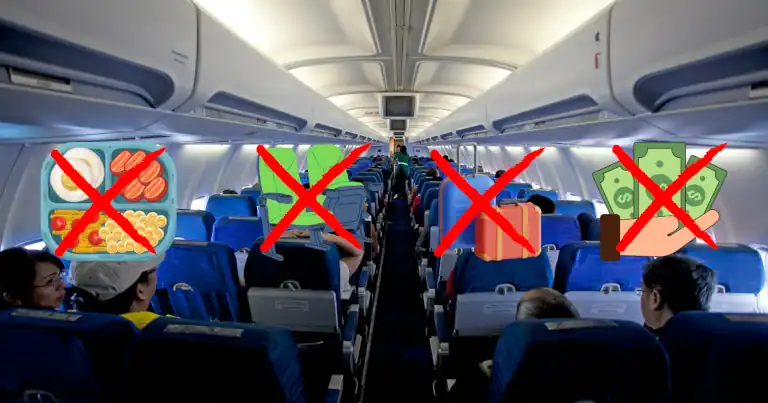
Denied Mid-Air: When Airlines Fail to Deliver Paid Promises
Airline failures aren’t just about delays or lost baggage. They include broken promises made before takeoff. Passengers book meals, seats, upgrades, and Wi-Fi in good faith. However, when those paid services suddenly disappear mid-flight, especially on long-haul journeys, the consequences range from discomfort to medical risk. This post decodes seven common failures across full-service and low-cost carriers, offering editorial recourse backed by consumer law, aviation regulations, and diagnostic clarity.
Airline Failures #1: Meals Promised, Meals Denied
Airline failures often begin with the tray. Full-service carriers (FSCs) traditionally include meals in the fare and invite passengers to pre-select their dietary preferences, including vegetarian, diabetic, religious, or allergy-sensitive options. But in economy class, it’s not just about choice: you may not get a meal at all if the flight is short-loaded or catering logic fails. Economy passengers bear the brunt of this friction, while business-class travellers typically receive in-flight choices.
With the rise of low-cost carriers (LCCs), airlines delinked the meal logic from the fare. Meals became optional, and passengers could either:
- Pre-pay online, selecting specific items, only to find their choice unavailable mid-air, with no cash refunds and a lower-priced substitute palmed off instead.
- Bundle meals at check-in, often alongside seats or baggage. These bundles are rarely honoured in full due to short turnaround times, and passengers are handed snacks instead of the promised meal.
Even complimentary upgrades introduce friction. On FSCs, passengers who move from economy to business class retain their economy meal entitlement. The airlines do not serve the passenger a business-class meal unless they pay for it. On LCCs, what the passenger paid for moves with them, but complimentary upgrades do not exist; the airlines also do not offer business-class meals unless the passengers make a purchase.
Airline Failures #2: Seat Selection Logic and the Vanishing Assignment
Airline failures often become apparent before boarding, typically at the seat map. On full-service carriers (FSCs), airlines traditionally assigned seats at check-in. With the rise of low-cost carriers (LCCs), seat selection was delinked from the fare and monetised. Now, even FSCs reserve premium seats, extra legroom, exit rows, and front cabin for paid selection, while offering limited free seats.
Passengers booking on a single PNR, especially families, often find themselves seated separately unless they pay to sit together. This friction escalates when aircraft type changes: the airline may remap or downgrade pre-selected seats. The passengers could lose the seats entirely.
The highest editorial breach occurs when an Entitled Passenger (EP) occupies your paid seat. Cabin crew may request that you relinquish your seat, citing operational needs or status logic, without offering compensation, even if you purchased your seat at a higher price. EPs may delay boarding, argue with crew, or pressure fellow passengers into surrendering seats.
This situation differs from that of VIPs, whom airlines proactively accommodate, such as government officials, celebrities, or airline partners. The Airlines entertain VIPs; EPs disrupt. Either way, the result is the same: a paid seat lost, and no refund in sight.
Downgraded Mid-Flight: Broken Seats and Editorial Displacement
Another layer of airline failure emerges when a business or first-class passenger is downgraded mid-flight due to broken, unserviceable, or reassigned seats. This friction is rarely disclosed upfront and often handled ad hoc by the crew, without clear editorial guidance or a logical rationale for compensation.
Suppose the passenger has fully paid for the seat. In that case, they must receive a cash refund for the fare difference, which should ideally be processed at the destination or via bank transfer. Airlines may offer vouchers, but passengers can refuse time-bound or tier-locked compensation, mainly if the downgrade affects medical needs, sleep, or work.
If the passenger acquired the seat via an upgrade, loyalty, bid, or complimentary logic, the refund becomes discretionary. Airlines may argue that the base fare remains unchanged, and downgrade compensation is not applicable. Passengers are often handed generic apologies or loyalty points, with no recourse or editorial review.
The result? A premium promise lost to technical failure, and a passenger displaced without clarity. Editorially, this is not just a downgrade, but it is a denial of paid dignity.
Airline Justifications and Passenger Rights in Seat Reassignment
Airlines often cite “operational reasons” when reassigning seats to accommodate VIPs, government officials, celebrities, or airline partners. This logic is embedded in the conditions of carriage and rarely contested. However, suppose you’ve paid for a specific seat. In that case, you must receive a cash refund at the destination, or a bank transfer if cash isn’t feasible. You have the right to refuse limited-time vouchers, especially if the seat was priced higher or selected for medical or family reasons.
When dealing with Entitled Passengers (EPs), those who forcefully occupy your paid seat, the airline cannot coerce you. The crew may attempt to reason with you. Still, the airlines rarely offer refunds, as technically, you have accepted the denial. Suppose you refuse to surrender the seat and the EP remains non-compliant. In that case, the airline must call security and offload the offender along with their luggage, causing delays.
In such moments, other passengers may view you as the cause of the disruption, even though you’re asserting a legitimate right. This editorial friction, between paid entitlement and social pressure, is rarely acknowledged, but it deserves clear and precise attention.
Airline Failures #3: Wi-Fi, Screens, and the Vanishing Signal
Airline failures aren’t just physical, but also digital. Many carriers now offer paid Wi-Fi, streaming bundles, or seatback entertainment as part of the in-flight experience. However, friction arises when airlines promise these services, passengers pay for them, and then the promises fail mid-air, with no refund, no apology, and no clear editorial explanation.
Passengers often pre-pay for Wi-Fi during booking or via onboard portals, expecting uninterrupted access. But signal dropouts, satellite handovers, or outdated aircraft systems result in non-functional connectivity. Airlines often cite “coverage limitations” or “technical issues,” and frequently bury them in fine print or disclaimers. Still, they rarely offer cash refunds, and vouchers are time-bound or region-locked.
Sometimes, due to equipment changes, the aircraft may not have the advertised features, such as no seatback screens, no Wi-Fi hardware, or no streaming capability. Passengers discover mid-air that what they paid for doesn’t exist on the plane. The crew may offer apologies, but the airlines will not provide refunds or alternate entertainment.
In LCCs, paid streaming bundles may not activate, and the airlines may not train their crew to troubleshoot. The result? A digital promise that vanishes mid-air, with no editorial recourse.
Airline Failures #4: Denied Upgrades and Loyalty Overreach
Airline failures also surface in the upgrade logic, where paid expectations collide with opaque loyalty hierarchies. Passengers may pre-pay for upgrades, bid through dynamic pricing, or receive promotional offers. However, friction arises when these upgrades are denied without a refund, or reassigned to loyalty-tier passengers without clear editorial justification.
In full-service carriers (FSCs), the airlines offer upgrades via bidding or fixed-price options. Passengers who pay in advance may find that their upgrade is not processed, especially if the aircraft type changes or the airlines prioritise loyalty-tier passengers. Airlines rarely offer cash refunds, and passengers are typically given vouchers with limited validity or region-specific restrictions.
In low-cost carriers (LCCs), upgrade logic is minimal; however, friction still exists when the airlines reassign paid seat upgrades (such as extra legroom or front cabin) due to operational reshuffling. Passengers discover mid-air that what they paid for has been reassigned, and the airlines do not offer any refunds.
Opaque upgrade logic also creates tension when loyalty-tier passengers override paid upgrades. Airlines cite “system logic” or “operational needs,” but leave passengers without any recourse. The result? A paid promise lost to loyalty bias.
Airline Failures #5: Baggage Promises and the Vanishing Priority
Airline failures extend to the hold, where paid baggage logic collapses under operational strain. Passengers pay for priority baggage, extra weight, or early retrieval, expecting seamless handling. However, friction arises when airlines fail to fulfil, delay, or deny their promises, especially during aircraft swaps or ground crew miscoordination.
In full-service carriers (FSCs), the airlines always bundle priority baggage with business class or loyalty tiers. However, carriers may ignore even paid priority tags at the destination with bags arriving last, or they may misroute the bags. Airlines cite “ground handling delays” or “equipment mismatch,” but rarely offer refunds, leaving passengers without recourse.
In low-cost carriers (LCCs), baggage logic is monetised aggressively, by weight, piece, and timing. Passengers may pay for early retrieval or oversized items, only to find that they receive no priority handling and no refund when the services fail. Friction escalates when aircraft changes result in baggage reclassification, or when the airlines offload paid items due to weight restrictions.
The highest tension arises when paid baggage is delayed or lost, and airlines often offer vouchers instead of cash refunds. The airlines use restrictive terms on the vouchers. Editorial clarity vanishes, and passengers are left chasing promises that never land.
Airline Failures #6: Denied Assistance and Medical Neglect
Airline failures aren’t always transactional, but they are also human. Passengers may request wheelchair support, stretcher assistance, or medical handling, which can often be booked and paid for in advance. But friction arises when these services are denied, delayed, or downgraded, especially during aircraft swaps or crew reshuffles.
In full-service carriers (FSCs), airlines often coordinate services with ground staff and third-party handlers to ensure seamless operations. However, if the aircraft changes or the crew is unfamiliar with the request, passengers may be left waiting on the tarmac or denied boarding altogether. Airlines cite “operational constraints” or “documentation mismatch.” Still, refunds are rarely processed, and the airlines offer the passengers vouchers along with generic apologies.
In low-cost carriers (LCCs), medical logic is minimal. Airlines may bundle wheelchair requests with other services, but this is not honoured if staff are unavailable. They may ask the passengers to walk unaided or wait for assistance that never arrives. The friction escalates when the airlines substitute paid medical support with verbal reassurances, or when crew refuse to accommodate onboard needs, citing safety or policy.
The highest tension arises when crew discretion overrides medical documentation. Passengers with valid fitness-to-fly certificates may still be denied boarding or asked to deplane mid-journey. Editorial clarity vanishes, and the paid promise becomes a liability.
Refund Logic and Crew Discretion in Medical Denials
When medical or assistance services are booked and paid for, passengers are entitled to a cash refund if the service is denied or downgraded. Airlines may offer vouchers, but passengers have the right to refuse time-bound or region-locked compensation, especially if the service was medically necessary.
Crew discretion plays a critical role. Even with valid documentation, such as fitness-to-fly certificates, crew may override approvals, citing safety or operational concerns. If the airlines deny boarding, passengers must request written justification and initiate refund claims through documented channels.
Editorial clarity demands that paid promises be honoured, especially when health and dignity are at stake. TTU continues to track such failures across carriers and invites passengers to share anonymised experiences for future editorial scaffolding.
Airline Failures #7: Refund Denied, Silence Delivered
Airline failures often culminate after landing, when passengers seek refunds for denied services, downgraded experiences, or operational lapses. The friction here is both editorial and financial: airlines delay, deny, or deflect refunds, leaving passengers to chase promises through opaque portals and scripted responses.
In full-service carriers (FSCs), the airlines may route refund requests through online forms, call centres, or travel agents. However, unless the passenger legally codifies the failure, such as denied boarding under EU 261 or mishandled baggage, airlines rarely offer cash refunds. Instead, passengers receive vouchers with expiry dates or loyalty points with limited utility.
Low-cost carriers (LCCs) often include refund disclaimers in their terms and conditions, which are frequently buried deep within their terms. If a paid service fails, such as Wi-Fi, meals, or seat upgrades, passengers are informed that the service is “non-guaranteed” or “subject to availability.” The refund portal may not recognise the booking or may automatically close the claim, citing policy exclusions.
The highest editorial breach occurs when passengers receive no response at all. The airlines do not respond to emails, disconnect calls, and extend the refund timeline into months. The airline’s silence becomes the final failure, a paid promise denied, and no editorial closure.
Recourse and Suggestions for Airline Failures
Recourse:
Passengers facing denied services, downgraded seats, or refund delays can escalate through official grievance portals. Depending on jurisdiction, these include:
- DGCA AirSewa (India) – For complaints related to Indian carriers, including refunds, baggage, and denied boarding.
- EU Passenger Rights Portal – Covers EU Regulation 261/2004 and Montreal Convention claims.
- US DOT Aviation Consumer Protection – For refund disputes, accessibility issues, and service failures.
- UK Civil Aviation Authority – For UK-based carriers and compensation claims.
- ICAO Consumer Protection Framework – For global policy reference and cross-border disputes.
- TTU’s Air Travel Conventions – Editorial breakdown of Montreal, Warsaw, and regional overlays
These portals offer structured complaint forms, timelines, and escalation logic. TTU recommends documenting every lapse with timestamps, receipts, and screenshots to strengthen your case.
Suggestions:
Passengers should refrain from accepting promotional offers or vouchers from airlines they rarely use, especially foreign carriers. These offers often depend on future travel with the same airline. They may be region-locked, non-transferable, or expire quickly. If you’re unlikely to fly with that carrier again, insist on cash refunds or bank transfers. Editorial sovereignty means choosing compensation you can actually use, not just what the airlines offer.
Suppose you feel compelled to book any add-ons in advance, such as meals, Wi-Fi, seat upgrades, or baggage bundles. In that case, TTU suggests waiting as long as possible, ideally close to the date of departure. Before committing, check the airline’s financial health, merger status, or acquisition news. If the airline is acquired or restructured, the new owners may refuse to honour pre-booked add-ons, especially if they conflict with revised policies. Editorial clarity demands that passengers protect their investment, not just their itinerary.